The 2026 Nobel Prize in Physiology or Medicine has put optogenetics in the spotlight. Karl Deisseroth, Peter Hegemann, and Georg Nagel were recognized for discoveries that made it possible to control nerve cell activity with light.
But the bigger story is what happened after those laboratory discoveries. Optogenetics is no longer only a tool for studying how neurons work. Researchers are now testing optogenetic approaches in people, including experimental therapies designed to restore aspects of vision in patients with advanced retinal disease.
A new clinical study published in October 2026 reported results from 10 patients with advanced retinitis pigmentosa, showing that the approach could be administered safely and that some participants experienced meaningful improvements in light sensitivity and visual tasks. That progression captures what makes optogenetics so significant: a discovery that began with light-sensitive proteins in microorganisms has developed into a technology being explored as a potential human therapy.
What Is Optogenetics?
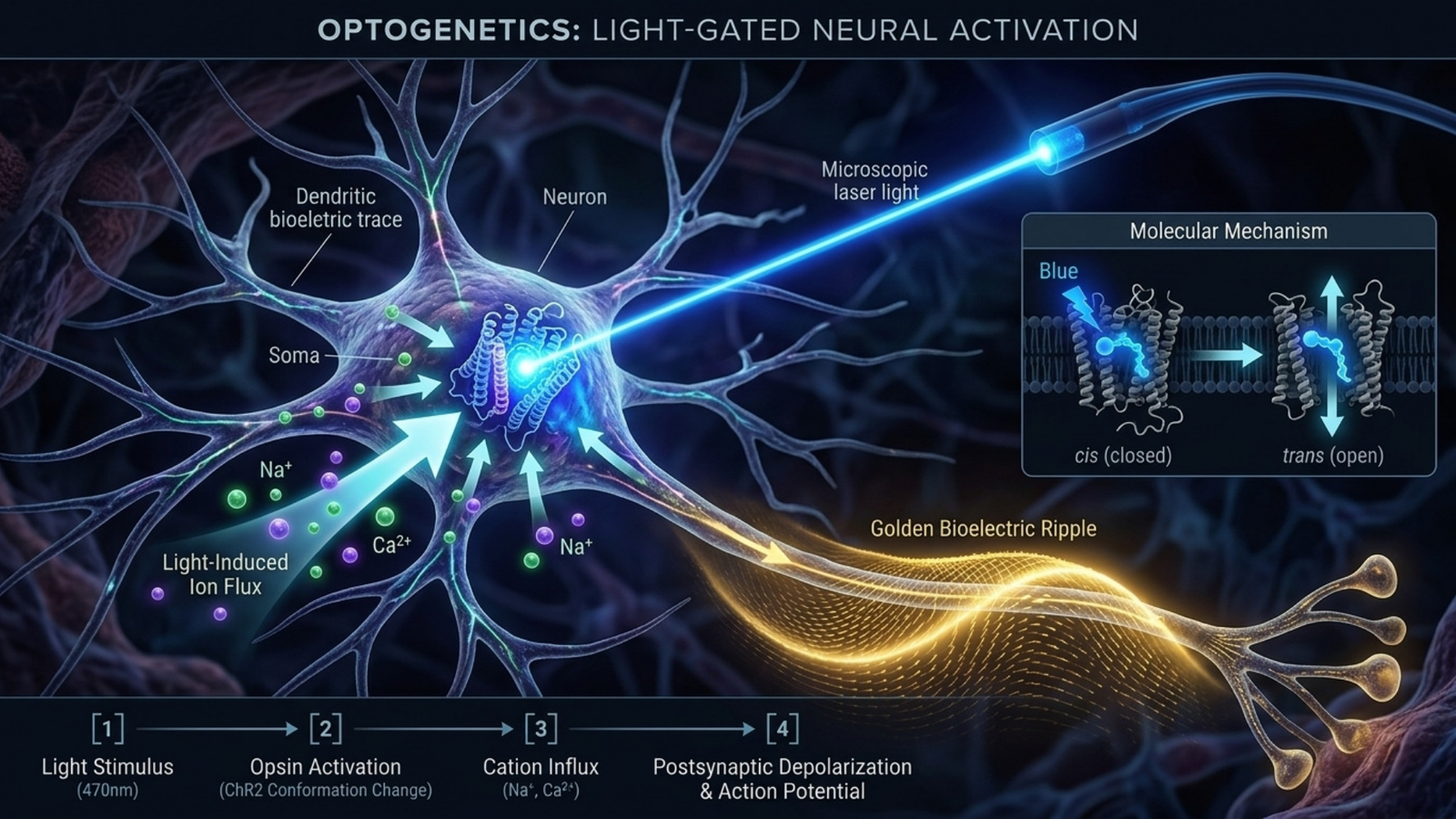
Optogenetics is a biological technique that combines genetic engineering with light to control specific cells' activity. The basic idea is relatively simple. Researchers introduce genes that allow selected cells to produce light-sensitive proteins called opsins. When those proteins are exposed to particular wavelengths of light, they can change the electrical activity of the cells.
In neuroscience, this gives researchers a way to activate or inhibit specific groups of neurons with much greater precision than conventional approaches such as electrical stimulation or drugs. Stanford describes optogenetics as a way to investigate the causal role of individual nerve cells and neural circuits in living systems.
That precision is what made the technology so valuable in laboratory research. Instead of simply observing that a group of neurons becomes active during a behavior, scientists can manipulate those cells and observe what happens as a result. This has helped researchers investigate neural circuits involved in areas such as movement, emotion, social behavior, and neurological disorders. Deisseroth's research, for example, has used optogenetics to investigate circuits associated with conditions including depression and Parkinson's disease.
Why Optogenetics Won the 2026 Nobel Prize in Physiology or Medicine
The foundation of optogenetics stretches back to research on microorganisms that respond to light. Peter Hegemann studied how single-celled algae detect light. He and Georg Nagel helped establish the properties of channelrhodopsins, light-sensitive proteins that can act as channels for electrically charged particles. These discoveries provided the biological components needed to make cells responsive to light.
Karl Deisseroth and his colleagues then helped turn that discovery into a practical neuroscience technology. His work showed how light-sensitive microbial proteins could be introduced into mammalian nerve cells and controlled with light. The resulting technique gave researchers a way to switch selected neural activity on or off and observe its effects in living animals.
The 2026 Nobel Prize recognized this progression from basic biological discovery to a technology that has transformed neuroscience. The Nobel recognition is therefore not simply about a single experiment. It reflects the development of an entire research platform that has changed how scientists investigate the nervous system.
How Optogenetics Made the Jump From Neuroscience Research to Therapy
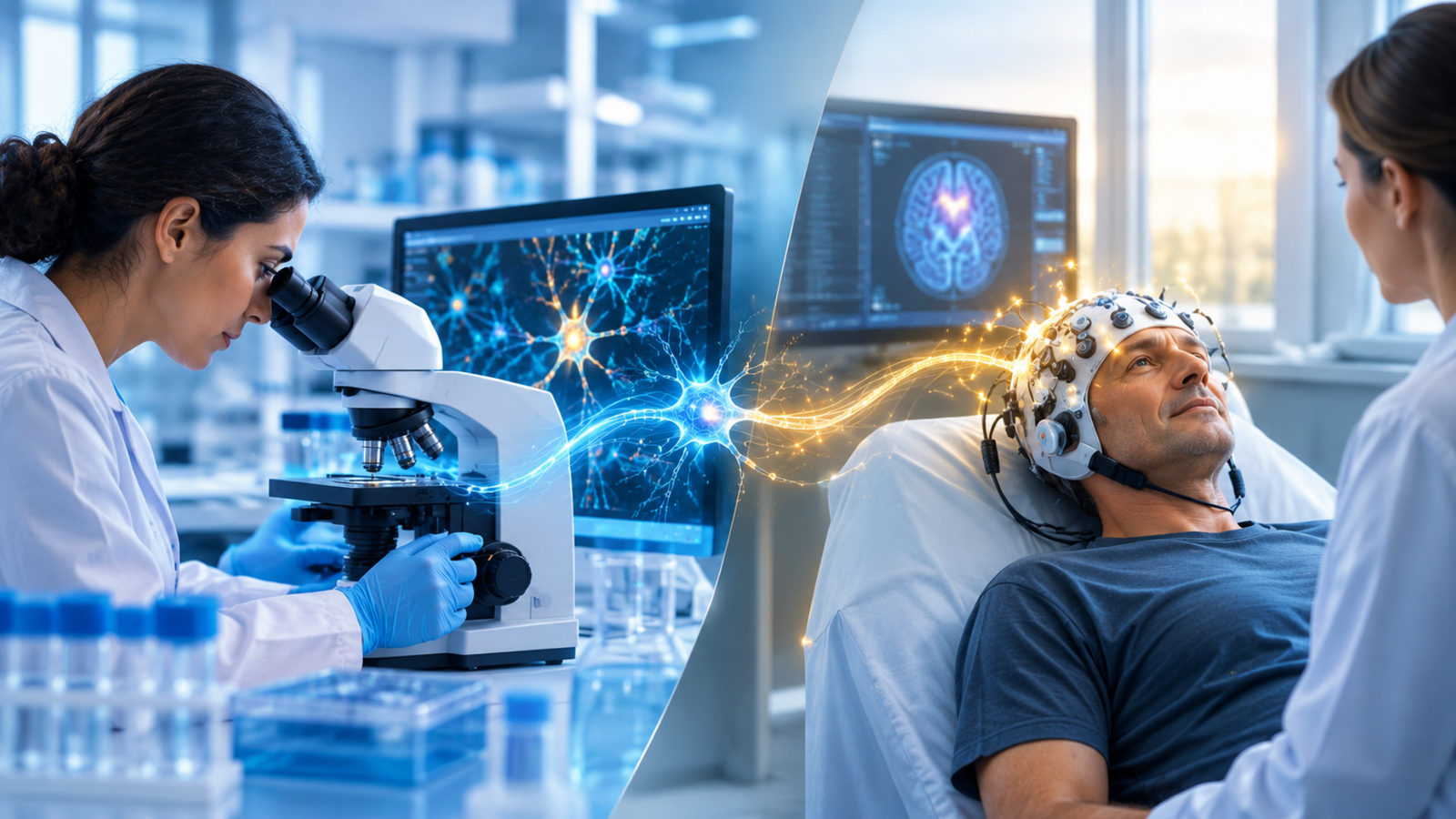
Turning a laboratory technique into a medical treatment is a much harder problem. Researchers have to determine whether the technology can be delivered safely, whether the intended cells can be targeted, whether the desired biological effect can be produced in humans, and whether that effect translates into a meaningful improvement in health or function.
Vision restoration has become one of the most advanced areas for testing this idea. One reason is the biology of retinal degeneration. In conditions such as retinitis pigmentosa, mutations in different genes can cause photoreceptor cells in the retina to progressively deteriorate. More than 100 genes can be associated with retinitis pigmentosa, making mutation-specific treatment challenging for the disease as a whole.
Optogenetic therapy takes a different approach. Instead of trying to correct every possible disease-causing mutation, researchers can attempt to make surviving retinal cells sensitive to light. This is particularly important in advanced disease, when many of the retina's original light-sensing photoreceptors have already been lost.
How Optogenetic Therapy Is Being Used to Study Vision Restoration
One experimental approach involves delivering a gene that enables surviving retinal ganglion cells to produce a light-sensitive protein. In the recent clinical study, researchers used an intravitreal injection to deliver genetic instructions for the light-sensitive protein ChrimsonR to surviving retinal ganglion cells. Patients then used specially designed goggles that captured visual information and converted it into patterns of light capable of stimulating the modified cells.
The system essentially creates a new pathway for detecting visual information. The photoreceptors that normally detect light may be severely damaged or absent.
The therapy instead attempts to give surviving retinal cells a new light-sensing function. The approach does not recreate normal vision. Instead, the goal at this stage is to provide enough visual information for patients to perform useful tasks. That distinction matters when discussing the current state of optogenetic therapy.
What the Latest Human Trial Found
The latest results represent an important step because the research moved beyond a single proof-of-concept patient to a clinical cohort. The study involved 10 people with advanced retinitis pigmentosa. The primary safety endpoint was met, and six participants showed a clinically meaningful increase in light sensitivity. Some participants also improved on tasks involving detecting or locating objects, finding doorways, and following lines while using the visual stimulation goggles.
The results are encouraging, but they require careful interpretation. The therapy did not restore normal, high-resolution vision. It also did not mean that participants suddenly regained ordinary sight.
Instead, the findings suggest that an optogenetic system can safely produce measurable visual function in some people with advanced retinal degeneration. That is an important distinction between proof of clinical potential and an established treatment. The study is part of a broader effort to translate optogenetics into therapies for retinal disease. Other clinical research has also explored optogenetic approaches for advanced retinitis pigmentosa, including trials involving different light-sensitive technologies and delivery strategies.
What Are the Potential Applications of Optogenetics?
Vision restoration is one of the clearest examples of optogenetics moving toward clinical application, but researchers are investigating much broader possibilities. Because the underlying concept involves controlling the activity of specific cells, optogenetics has potential relevance across neuroscience and other areas of biology. Researchers have used the technology to study neural circuits associated with:
- Parkinson's disease
- Depression
- Addiction
- Social behavior
- Movement
- Sensory processing
- Other neurological and psychiatric conditions
Much of this work remains experimental, particularly when it comes to direct therapeutic use in humans. For example, Deisseroth's laboratory has used optogenetics to identify neural circuits involved in Parkinson's disease and has demonstrated effects on symptoms in animal models. These findings help researchers understand disease mechanisms, but they should not be interpreted as evidence that optogenetic treatment for Parkinson's disease is currently available to patients. This distinction will remain important as the field develops.
What Still Stands Between Optogenetics and Routine Treatment?
The recent clinical results show that optogenetics can move into human testing. They do not mean the technology has completed that journey. As of now, several challenges remain.
Safety
Gene delivery and the introduction of light-sensitive proteins must be shown to remain safe over longer periods.
Targeting the right cells
The therapy needs to affect the appropriate cells without producing unwanted effects elsewhere.
Delivering enough light
Light must reach the modified cells at the right intensity and wavelength. In the vision-restoration approach, this is why specialized goggles are part of the treatment system.
Improving the quality of restored function
Detecting an object or locating a doorway is different from reading, recognizing faces or seeing detailed images. Future versions of the technology will need to improve the amount and quality of visual information that patients can use.
Larger and longer clinical studies
Early trials can establish safety and provide signals of potential benefit, but larger studies are needed to determine how consistently the therapy works and which patients are most likely to benefit.
A September 2026 review in Gene Therapy described optogenetic vision restoration as an emerging gene-therapy approach for advanced retinal degeneration and highlighted continuing development in opsin engineering, viral vectors and cell-specific targeting.
What the Future of Optogenetic Therapy Could Look Like
The most important change may not be that optogenetics has suddenly become a treatment. It is that the boundary between research tool and therapeutic platform is becoming less clear. For years, optogenetics primarily gave scientists a way to ask questions about cells and neural circuits. Now researchers are asking a different question: Can the same precision be used to restore lost biological function?
Vision restoration provides an early example of what that could look like. In advanced retinal disease, researchers are attempting to bypass damaged photoreceptors and give surviving cells a new ability to respond to light. Other research is exploring different opsins, delivery systems, and target cells to improve the effectiveness of the approach. The longer-term possibilities are broader.
If scientists can reliably control specific cells with sufficient precision, the underlying technology could potentially contribute to new approaches for neurological, sensory and other disorders where abnormal or lost cellular activity plays an important role. But those possibilities remain areas of research, not established clinical treatments.
From Nobel-Winning Discovery to Human Therapy
The 2026 Nobel Prize provides a useful moment to look back at how far optogenetics has come. What began with scientists studying how algae respond to light eventually became a method for controlling individual nerve cells. That method transformed neuroscience research and opened new ways to study the brain.
Now, clinical researchers are testing whether the same principles can be used to restore function in people. The recent retinitis pigmentosa results do not mark the end of that journey. They represent an early clinical milestone.
But they show why the Nobel recognition matters beyond the laboratory.
Optogenetics has moved from asking how cells work to exploring whether cells can be given new functions to help patients. That transition from discovery to therapy may ultimately become one of the most important chapters in the story of optogenetics.
Frequently Asked Questions
Optogenetics uses light to switch specific cells on or off, by adding a gene for a light-sensitive protein to the cells being targeted. It began as a research tool for mapping brain circuits and was recognized with the 2026 Nobel Prize in Physiology or Medicine.
Not yet, because no optogenetic therapy has been approved as a standard treatment. The furthest along is MCO-010 (Mogenry) for retinitis pigmentosa with severe vision loss, whose Biologics License Application the FDA accepted for review in September 2026.
In the randomized, sham-controlled RESTORE trial of 27 patients, the high-dose group gained about 0.34 logMAR in visual acuity over sham at week 52, roughly three lines on an eye chart. The trial was small, so larger and longer studies will be needed to confirm how well the benefit lasts.
Eye diseases are leading the way because the retina is easy to reach with an injection and easy to illuminate, and MCO-010 has also shown promising Phase 2 results in Stargardt disease. Brain and nerve applications are still mostly at the research stage.
Optogenetic therapy is still investigational, so anyone with an inherited retinal disease should ask a retina specialist about clinical trial eligibility and currently approved options. Be cautious about claims that it can already cure blindness or brain disorders until regulators have finished their review.