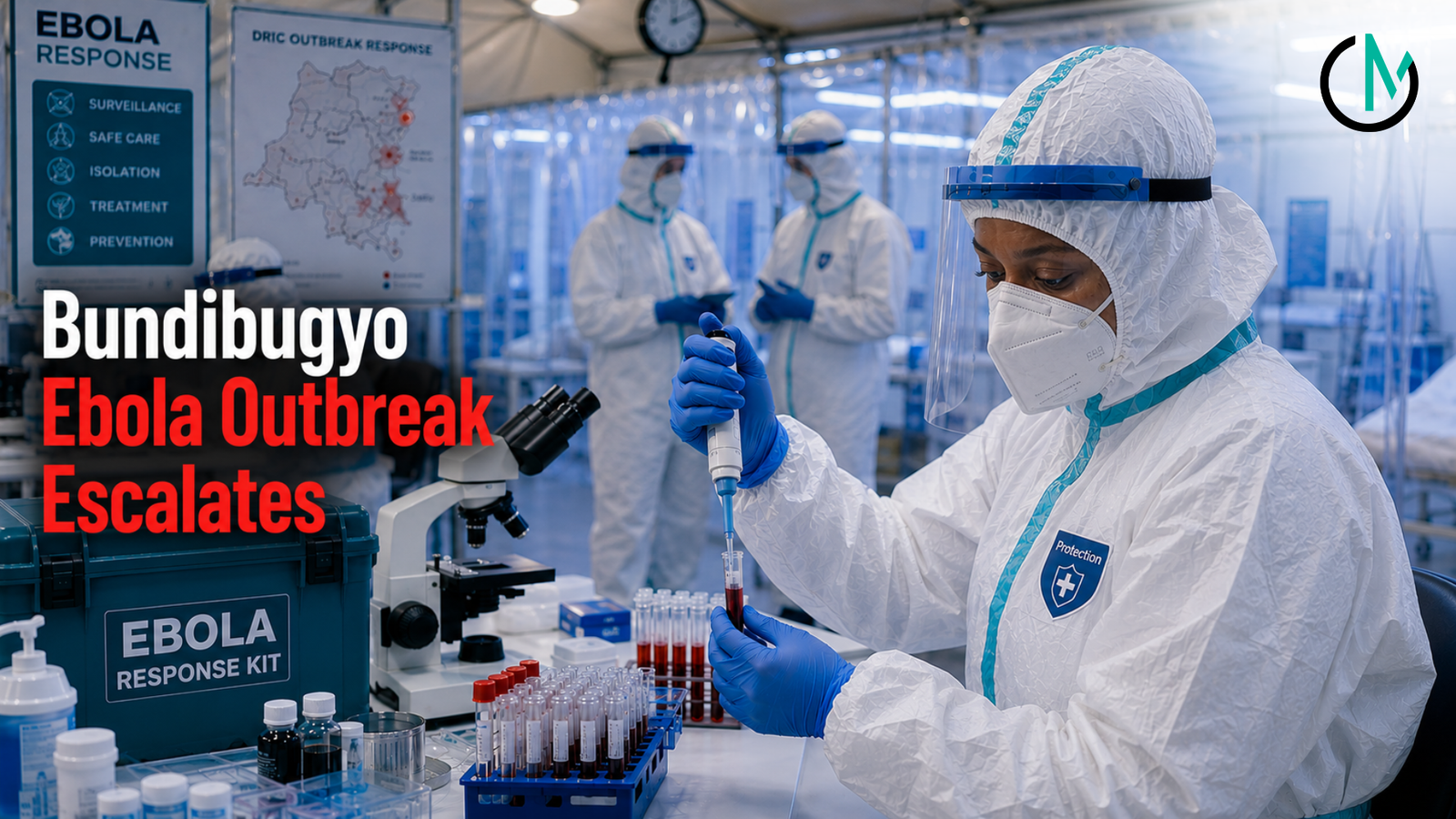
When a person is exposed to the Bundibugyo virus, the strain behind the current Ebola outbreak in the Democratic Republic of the Congo and Uganda, symptoms can appear anywhere from 2 to 21 days later. This time between exposure and illness is called the incubation period.
Key Takeaways
- Bundibugyo Ebola symptoms can begin 2 to 21 days after exposure.
- A person is generally not considered infectious before symptoms start.
- Anyone with a possible exposure who develops fever, weakness, vomiting, diarrhea, or unexplained bleeding should isolate immediately and contact health authorities.
Bundibugyo virus disease is a severe form of Ebola disease. Although it belongs to the same Ebola virus group as the better-known Zaire strain, it has different vaccine considerations and requires precise outbreak monitoring. For an overview of how the two strains differ, read OneMed Chronicle’s guide: Bundibugyo vs. Zaire Ebola Strains: Symptoms, Transmission, and Vaccine Efficacy.
How long is the incubation period for Bundibugyo Ebola?
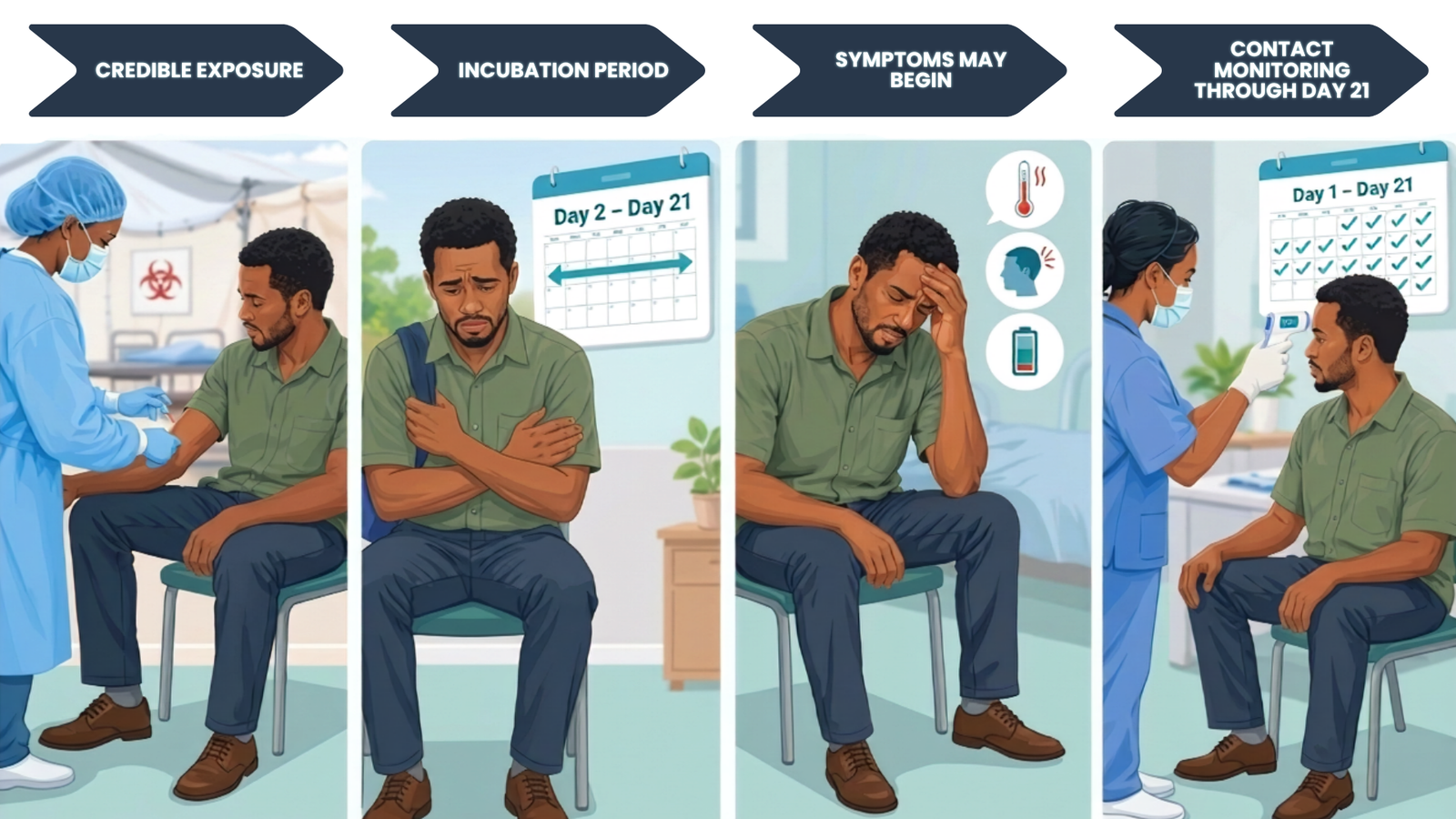
The incubation period for Bundibugyo Ebola is 2 to 21 days, meaning a person may develop symptoms as early as two days or as late as three weeks after a possible exposure.
WHO and CDC guidance both use this 2-to-21-day range for Bundibugyo virus disease. The incubation period does not mean that every exposed person will become ill. It describes the time window in which symptoms may begin if infection develops.
Public-health teams use the 21 days for contact follow-up. If someone has had a credible exposure, such as contact with the bodily fluids of a patient with suspected Ebola. Health workers may monitor them daily for symptoms during that window.
When do symptoms usually start?
Symptoms often begin around the second week after exposure, but there is no exact day that applies to everyone.
The timing can vary based on factors such as the type of exposure, the amount of virus involved, and the individual’s health. That is why a person should not assume they are no longer at risk after just a few symptom-free days.
The important cutoff is 21 days. If a person remains well for 21 days after their last possible exposure, they are generally considered unlikely to develop Ebola disease from that exposure.
What symptoms should someone watch for?
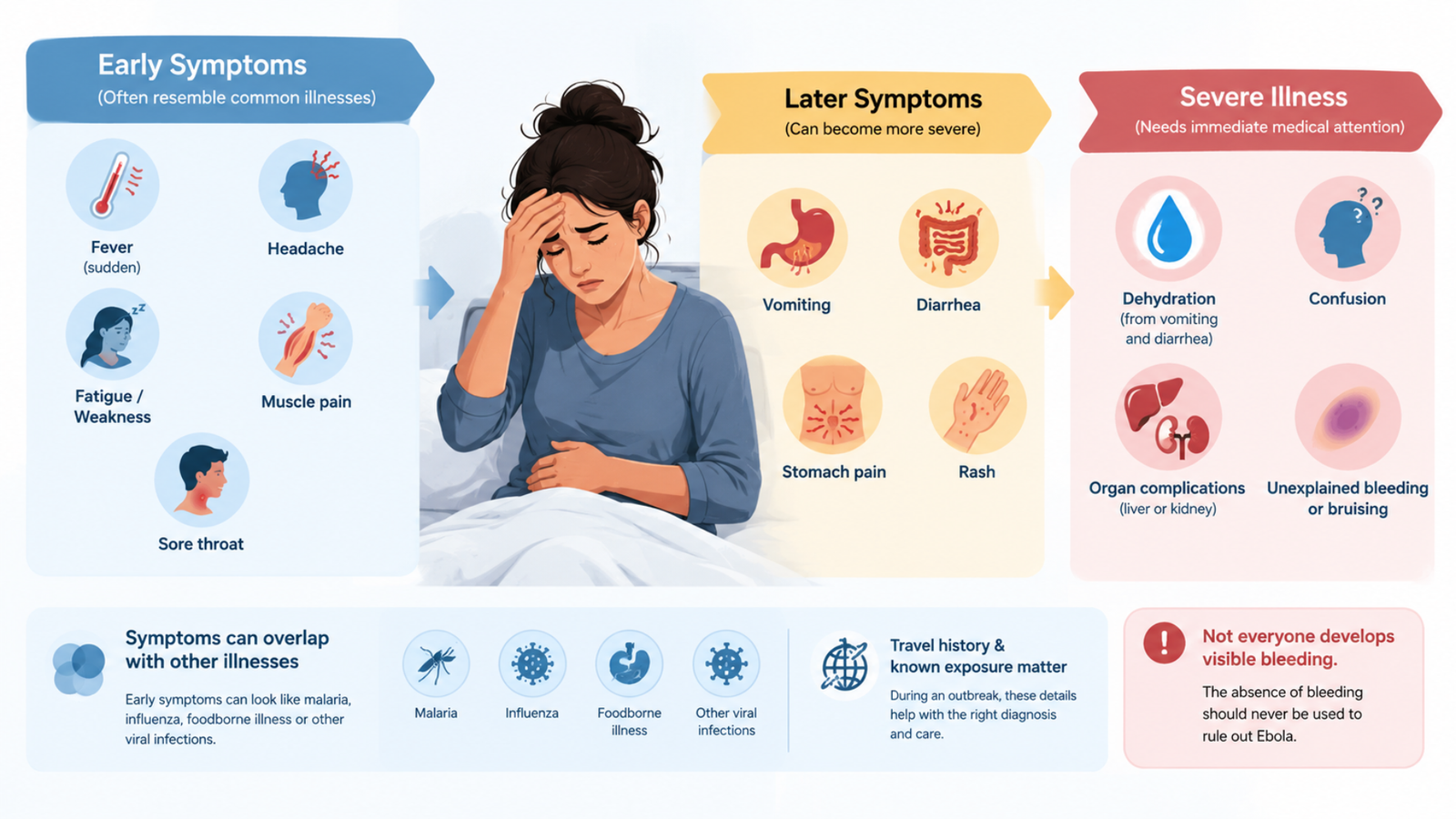
Early Bundibugyo Ebola symptoms include sudden fever, headache, fatigue, muscle pain, weakness, and sore throat. Later symptoms may include vomiting, diarrhea, stomach pain, rash, and unexplained bleeding or bruising.
Early symptoms can look like many more common illnesses, including malaria, influenza, foodborne illness, or other viral infections. This makes travel history and known exposure especially important during an outbreak.
Symptoms can progress quickly. As illness becomes more severe, people may develop dehydration from vomiting and diarrhea, organ complications, confusion, or bleeding. Not every patient has visible bleeding, so the absence of bleeding should never be used to rule out Ebola.
Can someone spread Bundibugyo Ebola before symptoms start?
No. People infected with Bundibugyo virus are generally not considered contagious until symptoms begin.
This is a critical point because Ebola does not spread in the same way as highly airborne respiratory illnesses. A person who feels well after an exposure should still monitor for symptoms, but they are not typically infectious before illness starts.
Once symptoms begin, however, the risk of transmission rises. The virus spreads through direct contact with infected blood or body fluids, contaminated objects, and the bodies of people who have died from Ebola disease. People are usually most infectious during severe illness and after death, when virus levels in body fluids can be high.
What should you do after a possible exposure?
If you may have been exposed to Bundibugyo Ebola, monitor yourself for 21 days and seek urgent medical advice immediately if symptoms develop. Do not travel while symptomatic.
A possible exposure may include:
- Direct contact with the blood, vomit, diarrhea, urine, saliva, sweat, semen, breast milk, or other body fluids of a sick or deceased person.
- Handling clothing, bedding, needles, or other objects contaminated with bodily fluids.
- Providing care in a healthcare setting without appropriate infection-control protection.
- Taking part in unsafe burial practices involving direct contact with a deceased person.
If symptoms begin, the priority is to avoid exposing others. Separate from other people, do not use public transport, and contact local health authorities or emergency medical services before arriving at a clinic. Calling ahead allows healthcare workers to prepare protective measures and reduce the risk of further spread.
Why is the 21-day monitoring period important?
The 21-day window helps public-health teams stop outbreaks before they grow. Monitoring exposed people allows health workers to identify possible cases quickly, arrange testing, isolate patients safely, and trace any additional contacts.
This approach is especially important in an outbreak involving Bundibugyo virus because there is currently no fully approved, strain-specific vaccine. Early detection, safe care, contact tracing, and community cooperation remain among the most effective ways to prevent new infections.
Monitor Your Health Constantly for 21 Days
Bundibugyo Ebola can cause symptoms 2 to 21 days after exposure, and people are generally not infectious before symptoms begin. Anyone with a credible exposure should monitor their health for the full 21 days. Fever, weakness, vomiting, diarrhea, stomach pain, or unexplained bleeding after exposure should be treated as an urgent public-health concern.
This article is for general information and is not a substitute for individual medical advice. If you believe you have been exposed to Ebola, contact public health or emergency medical services immediately.
Frequently Asked Questions
Symptoms can appear anywhere from 2 to 21 days after exposure to Bundibugyo virus. The timing varies from person to person, so a person with no symptoms in the first few days has not necessarily escaped infection.
Early symptoms include sudden fever, headache, fatigue, muscle pain, weakness and sore throat. Later symptoms can include vomiting, diarrhea, stomach pain, rash and unexplained bleeding or bruising.
People infected with Bundibugyo virus are generally not contagious before symptoms start. The virus spreads through direct contact with the blood or body fluids of a sick person, contaminated objects, or the bodies of people who have died of the disease, and it is not spread through the air like flu or COVID-19.
The 21-day window covers the longest known incubation period, so anyone with a possible exposure is watched for symptoms until that window has passed. If no symptoms develop within 21 days, the person is generally considered unlikely to have been infected.
Monitor yourself for 21 days, and seek urgent medical advice by phone first if any symptoms develop. Do not travel while you have symptoms, since early signs can look like malaria, flu or a stomach infection and need proper testing.